

i regret to inform you i may be moving on
See: Tips from a psychologist on Processing Through It, whatever 'It' is.

This is Bite Back, a newsletter from Tess Koman.
—
In two weeks, I have to meet many of my husband's new coworkers for the first time at a fancy thing. Once upon a time, when I was a cool person with a cool job, I loooved meeting my husband’s coworkers. “Are you in medicine too?” they’d ask. “No!” I’d scoff. I’d laugh! “I don’t know what I do, really, but I run food websites,” I’d giggle and supply. The follow-up questions always brought up an organic and sexy little~* discrepancy I’ve long loved: We were so very different, Michael and I, but we were both interesting. And the two of us together, our high-achieving right- and left-brained lives in parallel!? So fascinating! So fun!
…The idea of meeting my husband’s new coworkers now!? When I am…so different from the last time I answered that question, and, by this dumbass, headass logic, so completely uninteresting?
VOMIT. I’m vomiting, I vomited, did you hear me vomit!!!
(Wait, wait, also, I want to be so clear before we go any further: At no part of my life have I ever thought any of my jobs was as important or impactful as anything medical or scientific. Just want you to know that I have always known that “eating a lot on YouTube to grow a media conglomerate’s bottom line” is not, like, akin to helping a child qualify for and securing a legitimately life-saving medication.)
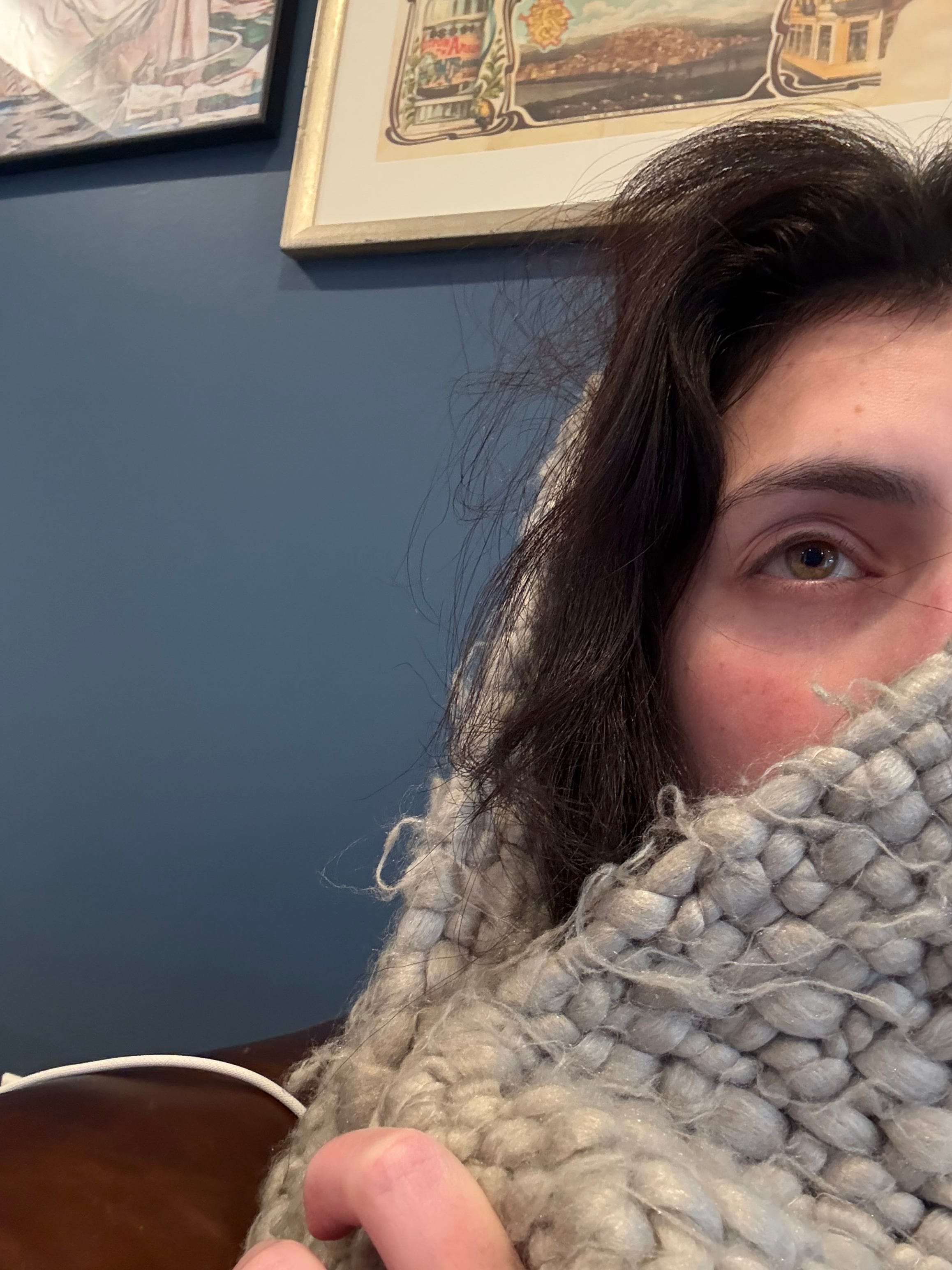
How we got here
“Who am I right now” is a theme that runs rampant in my writing and my brain pretty much all the time these days. And while I have been trying to detach the “who am I” of it all from the employment status of it all, that’s easier said than done when you are meeting a roomful of terrifically accomplished people with steady incomes.
I’ve been batting this around in therapy for as long as I’ve been physically strong enough to apply for jobs these past few months. “What do I tell people when they ask who I am or what I’ve been doing,” is a recurrent concern, sure, but I’m more worried about understanding it myself. And while I am well past the point of being embarrassed that I got laid off, I am seemingly not recovered enough from the events of the past 11 months to be able to answer that fucking “WHO AM I” question—either to myself or to others—without looping it back to some kind of trauma, heartbreak, or weird joke about having lived in a hospital for months.
TL;DR: I have been so worried that I have been personally and professionally pigeon-holed as a Person With a Disease that I…fear I may be pigeon-holing myself.
Uh oh!
What we’re (maybe) trying to do about it
While I am workshopping an actual, succinct, and non-trauma-dumping answer to this question for my therapist, I reached out to Dr. Jessica Gerson about why moving forward into a tangible new phase of post-sepsis life has felt so fucking hard. Dr. Gerson is a psychologist and Clinical Assistant Professor at the NYU Grossman School of Medicine; she runs many of their support groups, and specializes in Inflammatory Bowel Disease. This, I realize about three seconds too late, makes her…………..one of my husband’s coworkers. 🙃🙃🙃¯\_(ツ)_/¯¯\_(ツ)_/¯¯\_(ツ)_/¯
“You’re bringing up issues of diagnosing and labeling,” she begins after I ramble at her for four minutes about what I’d hoped to accomplish in this newsletter issue. “I think what you're saying is you have this kind of narrative about yourself, that you're someone who went through a serious trauma, and that it really informs who you are right now, and that you’re worried it may really inform who you are forever in some way.” …….WhooOooomp, there it is, etc., etc.
She continues, so kindly and so patiently: “A label or a diagnosis is a way of conceptualizing. I think it can be helpful to really lean into one when it feels like you can grow from it in some way.” OK, so…if everything I’m doing and saying and attempting these days still feels like it’s entirely borne of anger or sadness or fear from one of the 41842304 awful things I just lived through, does that mean…I’ve not really grown at all from my experiences? Is that it? Or am I, like, pre-growing?
“I think you're still constantly attempting to make meaning out of the things that happened to you and have a relationship with all of it. You're really grappling with that, and I think that's very healthy, actually.” Healthy?! Oh my god, ma’am, I’m blushing!!!
Ok wait, wait. Before I pat myself on the back too hard for being the platonic ideal of health and wellness this past year, Dr. Gerson clarifies why she’s not always thrilled about patients being in (or feeling like they’re in) these kinds of processing buckets.
Sometimes people unwittingly put a label on themselves, which feels permanent and inherently self-limiting. The reasons for that are complex, and I've seen a proliferation of this with young people. There’s almost a fear of thinking of oneself as more capable, because then you have to deal with all that stuff, right? But I think that if I had to kind of give one answer, it'd be: Use your labels to whatever extent it serves you and your growth, but if you find it's limiting you, or if it becomes everything you are, then really try to get back in touch with other parts of yourself.
(Young *and* healthy!? Dr. Gerson! Please!!!) (Sorry. Sorry!! I’m done.)
OK. The more I let that marinate, the more correct it feels. All of this writing, this rambling, this self-pity? I’ve been grappling! I’m grappling. Grappling is good. The deprecating repetitiveness around anyone who will listen, though? The weird side comments about a hospitalization that, at this point now, happened many months ago, anyYYy time I’ve been around other people? The ones I make at the weirdest, most awkward, most inappropriate times? That’s not…grappling, I don’t think. That’s continuing to throw myself into a traumatized box that no one else is whack-a-moling me into, as much as I’d love to think it’s being done to me, instead of that I’m doing it to myself.
Oop. Oof.
As far as how to actually un-self-limit, Dr. Gerson suggests compartmentalizing (which, she notes, is very different from disassociating!! Mind that gap, sickos!!). She urges people to reconnect with interests they had pre-awfulness, to plan dates with friends where talking about [The Self-Defining and/or Self-Limiting Topic] is off the table. To say “we’re just going to talk about what we’re reading!” or whatever it is, and to create spaces to remind yourself of other aspects of…you.
How we’re eating through it
I had the honor and privilege of eating the best blintzes in the entire fucking world this past week.
Keep reading with a 7-day free trial
Subscribe to Bite Back to keep reading this post and get 7 days of free access to the full post archives.